
Description
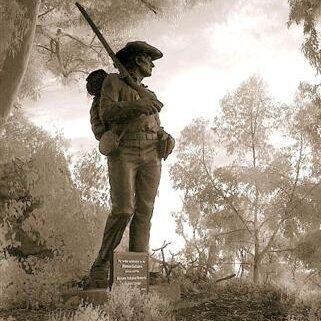
Mormon Battalion
The Mormon Battalion was called and volunteered out of Western Iowa and left the Latter Day Saints there on the Missouri River on the Iowa side and began their march down to Santa Fe and on into California as part of the Mexican War in 1846.
The whole Mormon Battalion’s march is a little known event in church history, yet, it was a huge import and if you understand the implications even now. Brigham Young, once referred to the men of the battalion as the salvation of this church. Here’s one story from that march. I shared it in the conference when we were there and I thought I would do it again here to get all the facts in and details that I couldn’t share in the conference.
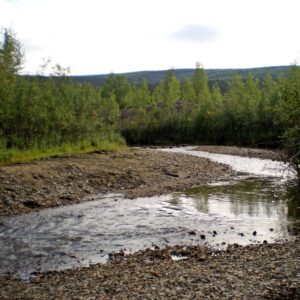
December 11, 1846, along the San Pedro River in southeastern Arizona, the men of the Mormon Battalion continued their grueling march for California. They had come down through Iowa and down into Kansas territory, from there to Santa Fe, across New Mexico and now we’re crossing into Southeastern Arizona. As they came along the San Pedro River, wild longhorn cattle roamed the hills above them. They’ve been abandoned and left there by Mexican ranchers who had been driven off by Apaches sometime before.
It is reported by Daniel Tyler of the battalion and there are conflicting reports that the men startled a herd of these wild longhorns that came toward them, some scattered from the hills. But some of the bulls charged right at them, and the men began to open fire into the bulls. Pandemonium broke loose, dozens (not quite a 100) but they describe dozens of raging Longhorn bulls, stampeded down out of the hills and charged through the battalion camp, goring mules, overturning wagons. The men ran in every direction, dodging the bulls and shooting as they went. Other men ran for cover. Some climbed up short trees or just dropped to the ground and let the bulls run over them.
One private, Amos Cox, was hooked by the horn of one bull, in the thigh, right where adjoins the torso and thrown 10 feet over the head of the bull and down the length of the bulls body. Sergeant Albert Smith was trampled by a bull and had three ribs broken. Another man was severely bruised when a bull charged him and the horns passed on either side of his body. One diary reported, “The bulls are as daring and savage as tigers.”
Another man was being chased and suddenly just dropped to the ground and the bull leaked right over him. Now the exciting part of the whole story is Colonel Phillips St. George Cook, the commander of the battalion, was according to one diary, mounted on a white mule, and watching the fray from nearby, when all have a son of black bull about 100 yards away, charged at Colonel Cook. Standing near the colonel was Corporal Lafayette McCullers Frost. Colonel Cook recorded the following, “I was very near Corporal Frost, when an immense cold black bull came charging upon us, a hundred yards distant. Frost, aimed his musket, a flintlock, very deliberately, and only fired when the beast was within six paces. It fell headlong, almost at our feet, Cook said.”
Well, of course, Colonel Cook was relieved and impressed. He commended Frost as, “one of the bravest men he ever saw”. But he also said he wanted no further proof of his courage. Well, in a detailed memoriam of the event, the ranking general authority on the march, Levi Hancock composed a poem, part of which reads as follows:
“The colonel and his staff where they’re mounted in witnessing the war,
A bull 100 yards away, eyed Colonel Cook as easy prey,
But Corporal Frost stood bravely by,
And watch the bull with steady eye,
The Brute approached near and more near,
but Frost betrayed no sign of fear
The Colonel ordered him to run.
Unmoved, he stood with loaded gun,
The bull came up with daring tread,
when near his feet, Frost shot him dead.”
Well, that story recorded by multiple witnesses is true. And interestingly enough, it would be one of the only battles the battalion would have and the man who went down in legend, as it were representing the bravery of all the men of the battalion was Corporal Lafayette McCullers Frost.
But the part of the story that no one knows is that Corporal Frost would never live to return to his family, to his parents. Daniel Tyler wrote the following, “On the eighth day of September 1847, Sergeant Frost, the former brave corporal, on whose memory the battalion loved to dwell, succumbed to the fell monster death. No eulogy on his character is needed. Suffice it to say, he was a man of few words, but abundant in good deeds. His remains were interred a half mile southeast of town.”












Reviews
There are no reviews yet.