
Description
I Command Thee to be Whole
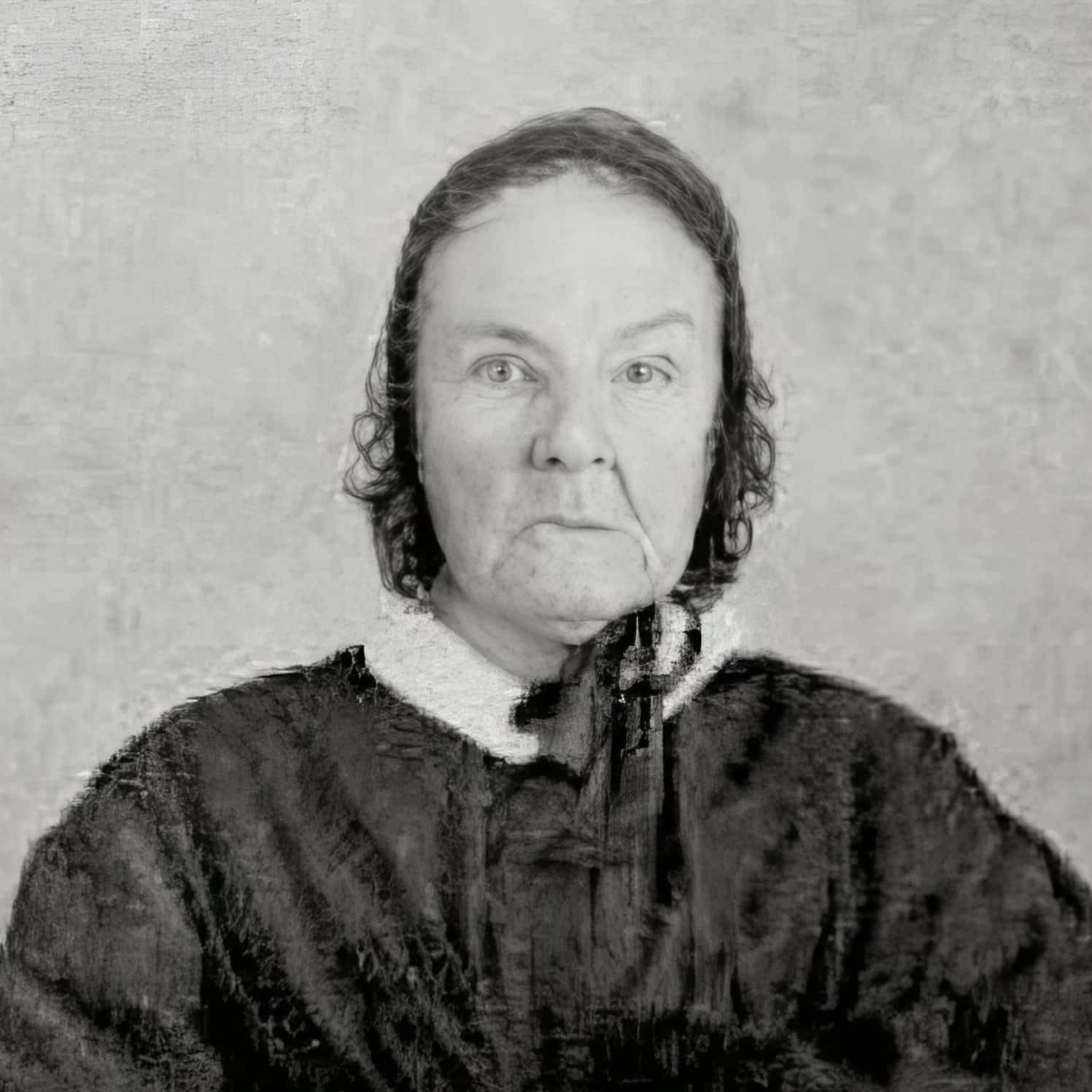
John and Mary Alice “Elsa” Johnson lived in Hiram, Ohio in early 1831. They were prosperous farmers with a large family. In January 1831, Ezra Booth, a friend and minister visited them with news of a new prophet and a new religion. In addition, they learned that one of their sons, 19 year-old Lyman Johnson had joined that Church in Kirtland and he came home with a copy of the Book of Mormon. The Johnsons and Ezra Booth spent an evening studying the Book. They concluded to go to Kirtland to meet the Prophet Joseph Smith for themselves. Mary Alice “Elsa” Johnson had a crippled rheumatic arm that she could not use. According to one Ohio historian:
“The party visited Smith partly out of curiosity, and partly to see for themselves what there might be in the new doctrine. During the interview the conversation turned on the subject of supernatural gifts, such as were conferred in the days of the apostles.
Someone said, ‘Here is Mrs. Johnson with a lame arm; has God given any power to men now on earth to cure her?’ A few moments later, when the conversation had turned in another direction, Smith arose, and walking across the room, and taking Mrs. Johnson by the hand, said in the most solemn and impressive manner: ‘Woman, in the name of the Lord Jesus Christ, I command thee to be whole,’ and immediately left the room.
The company were awe-stricken at the infinite presumption of the man, and the calm assurance with which he spoke. The sudden mental and moral shock—I know not how better to explain the well-attested fact, electrified the rheumatic arm—Mrs. Johnson at once lifted it with ease, and on her return home the next day she was able to do her washing without difficulty or pain.”
Philo Dibble who lived in Kirtland at the time also left an account of the miracle. He wrote:
“I saw them as they passed my house on their way. She [Elsa Johnson] went to Joseph and requested him to heal her. Joseph asked her if she believed the Lord was able to make him an instrument in healing her arm. She said she believed the Lord was able to heal her arm. Joseph put her off till the next morning, when he met her at Brother [Newel K.] Whitney’s house.
There were eight persons present, one a Methodist preacher, [Ezra Booth] and one a doctor. Joseph took her [Elsa Johnson] by the hand, prayed in silence a moment, pronounced her arm whole, in the name of Jesus Christ, and turned and left the room. The preacher asked her if her arm was whole, and she straightened it out and replied: ‘It is as good as the other.’ The question was then asked if it would remain whole.
Joseph hearing this, answered and said: ‘It is as good as the other, and as liable to accident as the other.’ The doctor who witnessed this miracle came to my house the next morning and related the circumstance to me. He attempted to account for it by his false philosophy, saying that Joseph took her by the hand, and seemed to be in prayer, and pronounced her arm whole in the name of Jesus Christ, which excited her and started perspiration, and that relaxed the cords of her arm.
I subsequently rented my farm and devoted all my time to the interest of the Church, holding myself in readiness to take Joseph wherever he wished to go.”
Sources:
A Comprehensive History of The Church of Jesus Christ of Latter-day Saints, 1:278
“Philo Dibble Autobiography (1806-c. 1843),” in “Early Scenes in Church History,” Four Faith Promoting Classics (Salt Lake City: Bookcraft, 1968), 79









Reviews
There are no reviews yet.