
Description
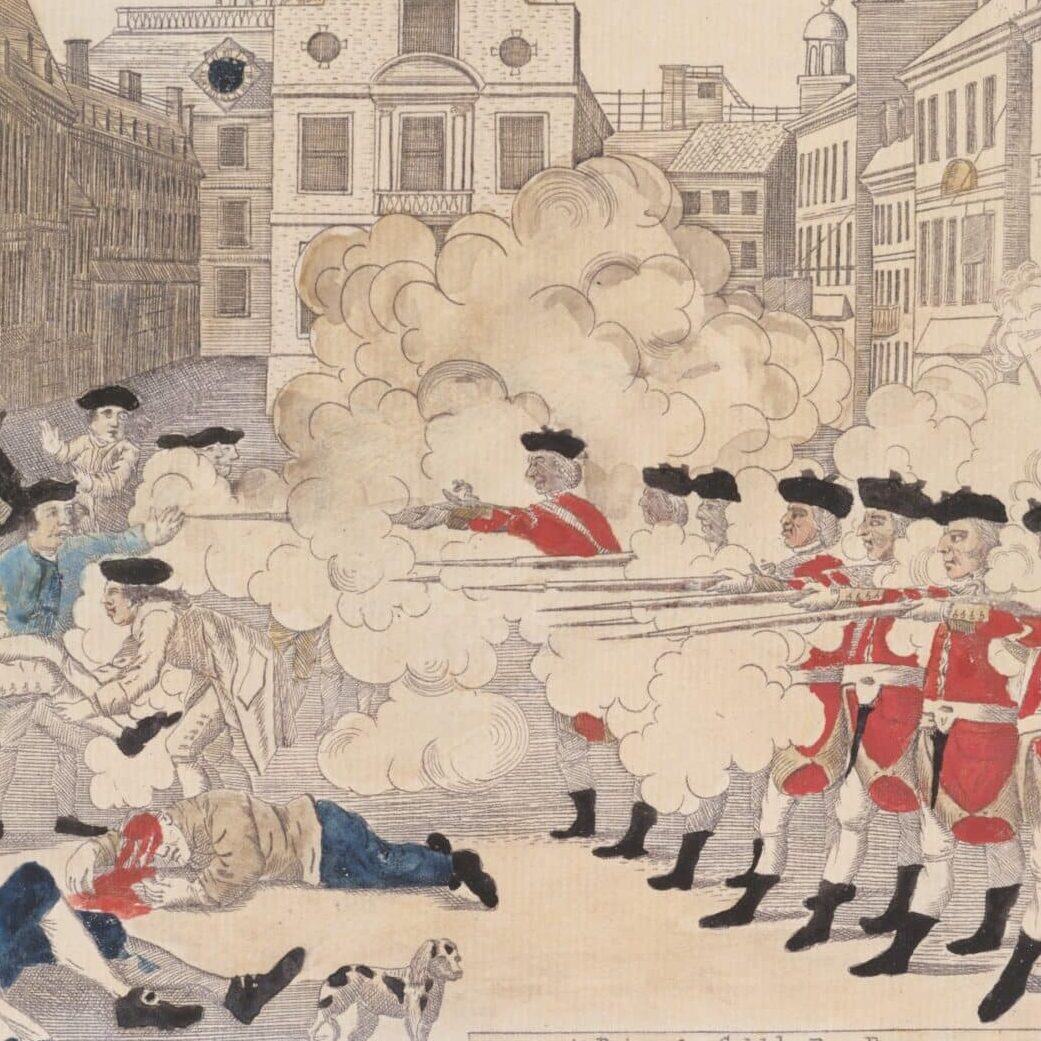
Boston Massacre
Freedom has been on my mind a great deal of late. I cherish it both as a principle and a practice. Hence, I share this story in an effort to hold onto this precious gift.
March 5, 1770: It was a cold moonlit night in Boston, sometime after 9:00 pm, when a mob of about fifty men and boys gathered about a lone British sentry, standing guard at the Customs House. Threats and taunts escalated and soon there were over a hundred townspeople and nine British soldiers in a faceoff. Tensions were already high over the killing of young Boston boy just days before by the British. Soon rocks and snowballs began to pelt the soldiers along with cries of “Kill them.” What happens next no one to this day is entirely sure. One soldier is knocked down with a stick. He tries to get up and is knocked down again. He fires his musket into the unarmed crowd, as do others of the soldiers. When the melee was over five Boston men lay dead and six wounded.
Quickly, the story spread and became embellished as the Boston Massacre. Public opinion had been against the British since 4000 redcoats had been sent to keep the peace among Boston’s 20,000 inhabitants, but with this the citizens were enraged. The soldiers were arrested and charged with murder. The prosecution was arranged with dispatch, but no one in Boston would take the soldier’s defense–until a daring 34 year-old Massachusetts lawyer stepped up.
This was not a popular case and he knew it. It would likely damage his reputation as well as his law practice. Compounding his worries was his concern for the safety of his expectant wife and young family.
In an effort to compose himself he sat down and wrote in his diary. Among other things, he copied the following, “If by supporting the rights of mankind, and of invincible truth, I shall contribute to save…one unfortunate victim of tyranny…his blessings and years of transport will be sufficient consolation to me for the contempt of all mankind.”
There would be two trials; one for Captain Thomas Preston and another for the eight soldiers under his command. In his closing arguments in the second trial, the young defense attorney said, “Facts are stubborn things and whatever may be our wishes, our inclinations, or the dictum of our passions, they cannot alter the state of facts and evidence.” Note his statement about ‘the dictum of our passions.’ It was a flawless and winning argument.
In the end, Captain Preston was acquitted, as were six of the soldiers. It was not a popular decision but it was the right one. The Boston Massacre would serve a paradoxical purpose. In the first instance, it would prove a rallying cry against the British leading up to the American Revolution; and in the second, it would prove that the new America would stand upon the rule of Law, not the impassioned rule of public opinion—and that all men have inalienable rights, and are equal before the law
By his own reckoning that young attorney did indeed lose half his practice, but he went on to become something—and stand for something–so much greater—he was John Adams. If justice ever ceases to be blind in America she will no longer see freedom.
Copyright Glenn Rawson 2020








Reviews
There are no reviews yet.