
Description
A More Perfect Union
As I have shared in another place, I never learned how to type until I was in my 40’s. It was a bit of a struggle to get my fingers trained appropriately. Even now I still manage to come up with some spellings that would make Mark Twain proud. While doing graduate work in Constitutional studies, I found myself frequently having to spell out the United States of America. I don’t know why but as often as not my fingers that would not fly right and I would misspell it. It was always the same word and it was always the same way. It was the word—“United” except I spelled it, U-N-T-I-E-D. One day while composing something related to the Constitution I misspelled United again. The irony of what I had done suddenly struck me.
If ever the “United States” become, the “Untied States” it will be because they are no longer united. Indeed, it was Abraham Lincoln who said,
“At what point shall we expect the approach of danger? By what means shall we fortify against it? Shall we expect some transatlantic military giant, to step the Ocean, and crush us at a blow? Never! All the armies of Europe, Asia and Africa combined, with all the treasure of the earth (our own excepted) in their military chest; with a Buonaparte for a commander, could not by force, take a drink from the Ohio, or make a track on the Blue Ridge, in a trial of a thousand years. At what point, then, is the approach of danger to be expected? I answer, if it ever reach us it must spring up amongst us. It cannot come from abroad. If destruction be our lot, we must ourselves be its author and finisher. As a nation of freemen, we must live through all time, or die by suicide.” The Collected Works of Abraham Lincoln edited by Roy P. Basler, Volume I, Address Before the Young Men’s Lyceum of Springfield, Illinois (January 27, 1838), p. 109.
I believe this is true! I believe that “A house divided against itself cannot stand….” Lincoln’s ‘House-Divided’ Speech in Springfield, Illinois, June 16, 1858.
If you would permit may I share some thoughts about one of the great principles of the United States Constitution—unity.
Monday September 10, 1787, the delegates to the Constitutional Convention in Philadelphia were all but finished. It had been a long summer and finally they recommended their final resolutions to a committee called by them “The Committee of Stile and Arrangement.” Two days later, September 12, the Committee returned their final report. It is interesting what appeared in that final draft that had not been there before, at least not in this form. There was no discussion upon it. It was approved as it stood with no debate. That clause virtually the last added, would forever be the first read. It was the Preamble to the Constitution. It reads,
“We the people of the United States, in order to form a more perfect union, to establish justice, insure domestic tranquility, provide for the common defence, promote the general welfare, and secure the blessings of liberty to ourselves and our posterity, do ordain and establish this Constitution of the United States.”
Now compare what had been written in the draft just previous,
“We the people of the States of New Hampshire, Massachusetts, Rhode Island and Providence Plantations, Connecticut, New York, New Jersey, Pennsylvania, Delaware, Maryland, Virginia, North Carolina, South Carolina, and Georgia, do ordain and establish the following Constitution for the Government of ourselves and our Posterity.”
Do you see the difference in that last moment change—instead of being a nation of the peoples of 14 distinct sovereignties, they were to be one people and one nation. Moreover the paramount priority and purpose of the Constitution as they so stated it was, “In order to form and more perfect Union.”
What does the Preamble do the Constitution? It is the lens through which the document must be viewed. It is the overarching and undergirding structure on which the entire document rests. It declares unequivocally the authority of the document and mandates forevermore how it must be interpreted. Every law, every action, every judicial decision, if it constitutional, is to serve those purposes announced in the Preamble, and foremost among those is “UNION!”
And it did not end there—back on August 31, Colonel Mason of Virginia had declared that he would sooner chop off his right hand than put it to the Constitution as it now stands” (p. 566)
After the presentation of the finished product on September 12, all the delegates, including Colonel Mason, were given the opportunity to have their views heard. When the final vote was taken on Saturday September 15, the majority voted against Colonel Mason’s objections.
Now we have here a situation which has been duplicated hundreds and thousands of times in the world of American Politics. Someone is offended by the decision of the majority. What will they do now—will they join forces and give the majority their strength, or will they divide and conquer? There is a powerful lesson to be learned by what happened next.
September 17, 1787, the last day of the Convention, Colonel Mason was now joined in his opposition to the finished work of the Constitution by Edmund Randolph, also of Virginia and Elbridge Gerry of Massachusetts. All three men had threatened not to sign the document. That morning having spent the weekend worrying about this very thing, “Doctor Franklin rose with a speech in his hand.” James Wilson read it for him. Among other things he said this,
I confess that there are several parts of this Constitution which I do not at present approve, but I am not sure I shall never approve them: for having lived long, I have experienced many instances of being obliged by better information, or fuller consideration, to change opinions even on important subjects, which I once thought right, but found to be otherwise. It is therefore that the older I grow, the more apt I am to doubt my own judgment, and to pay more respect to the judgment of others….In these sentiments…I agree to this Constitution with all its faults, if they are such….When you assemble a number of men to have the advantage of their joint wisdom, you inevitably assemble with those men, all their prejudices, their passions, their errors of opinion, their local interests, and their selfish views. From such an assembly can a perfect production be expected? It therefore astonishes me to find this system approaching so near to perfection as it does….Thus I consent to this Constitution because I expect no better, and because I am not sure that it is not the best. The opinions I have had of its errors I sacrifice to the public good.” He then closed with this plea aimed at the naysayers, “I hope therefore that for our own sakes as a part of the people, and for the sake of posterity, we shall act heartily and unanimously in recommending this Constitution.”
Franklin then moved that the Constitution be signed by the members. But it was not to be Randolph, Mason and Gerry refused to sign. And when the document went out to the states for ratification these three joined with others and became a formidable force in opposing the Constitution. It became exactly what Alexander Hamilton had predicted on that last day of the Convention. “A few characters of consequence,” he said, “by opposing or even refusing to sign the Constitution, might do infinite mischief.”
In the end and after a tremendous battle the document was signed, but those three have ever borne the stigma of their stand against the document. How much better it would have been if they doubted less their political judgment and more that of their fellows. How much better things may have gone if they had given their names to the document that a united and steadfast front might have been presented to the people, and then after ratification worked through the means established to effect the corrections they desired.
During the ratification debates, James Madison, Alexander Hamilton, and John Jay joined forces in a series of newspaper editorials in the State of New York to persuade the people to ratify the newly proposed Constitution. In Federalist 10 Madison said this “As long as the reason of man continues fallible, and he is at liberty to exercise it, different opinions will be formed.” “Liberty” he said, is to faction what air is to fire.”
As long as we exist in this mortal and imperfect world there will always be differing points of view. Until that perfect day men will ever disagree. The threat to unity is not in a contrasting point of view however, but in how it is expressed and why.
Consider this all too common scenario—choose whatever entity you want, a family, and city, a state or a nation. If someone ambitiously wants attention or worse, power, how are they to get it, especially when things are going smoothly? They stir up trouble. They begin to point out and accentuate the faults of failings of those who lead. Before long they are joined by others and suddenly a faction or as we more commonly call them, a political party or special interest group is born. From that moment on the power and energy of a united people is untied and that power and energy is thenceforth expended fighting amongst themselves.
The Framers considered parties a social disease. It was Washington who said of them, “They are likely in the course of time and things, to become potent engines by which cunning, ambititous, and unprincipled men will be enabled to subvert the power of the people, and to usurp for themselves the reins of government.” And still quoting from Washington’s farewell address, he said, “The common and continual mischiefs of the Spirit of party are sufficient to make it the interest and duty of a wise people to discourage and restrain it.”
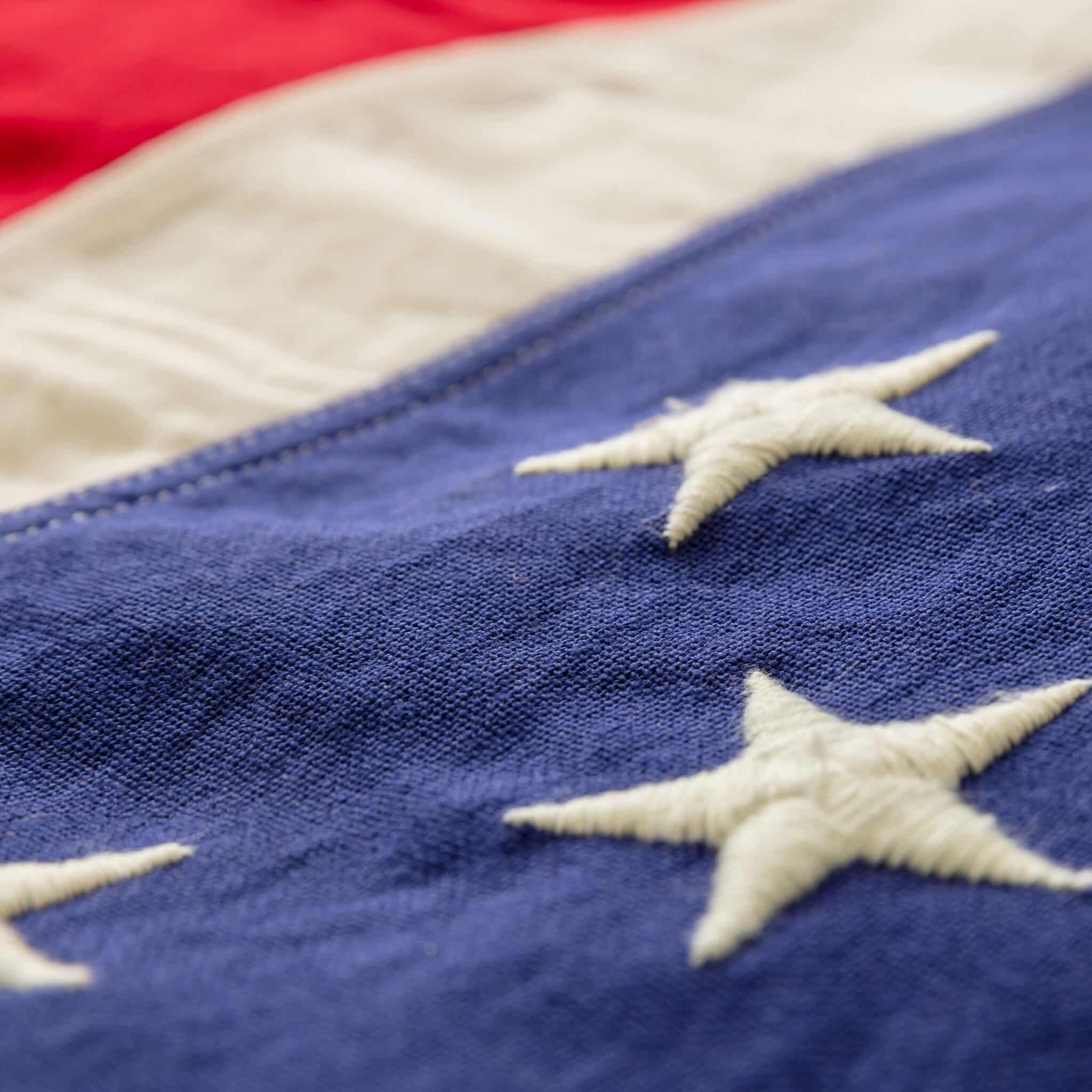
We are to be the people of the United States of America in a state of more perfect union. I am reminded of the war of 1812, when the British attacked America once more threatening to destroy our free Constitution and bring us as a people once more under the rule of the Crown. The Redcoats marched across the nation burning and pillaging as they went. In some places cities and towns simply gave up without a fight and welcomed the British in. They took Washington DC and burned the nation’s capitol. There rampage was unimpeded until they came to the city of Baltimore. Here was a people who stood together and refused to surrender. They hoisted and huge American flag 90 feet in the air and prepared for the attack. It was that battle that raged through the night that was witnessed by Francis Scott Key. With the coming of the dawn, “our flag was still there.” We won that battle—we won that war and all because there were some who refused to be divided.
The foremost principle of the Constitution is unity in Liberty. We are to be the United States of America not the Untied States of America. We are “one nation under God, indivisible, with liberty and justice for all. And it is not out there—that a “more perfect Union” begins. It is here this very night in what we say and do. The Constitution was designed to make all men neighbors and every nation friends.
I close with these words from the Constitutional Convention dated July 5th 1787 from Governor Morris of Pennsylvania, “This country must be united. If persuasion does not unite it, the sword will.”
Copyright Glenn Rawson 2020








Reviews
There are no reviews yet.