
Description
Speaker: Glenn Rawson
Hi, this is Glenn Rawson. One of the most powerful ways to share history and heritage is by the telling of stories. We began sharing inspiring stories nearly 30 years ago. Each of those stories is true and was intended to inspire and strengthen faith. Over the years, those stories have reached millions around the world. This podcast is for you to listen, learn and enjoy.
First Story:
Christmas means a lot of different things to different people. I had an experience some years ago that still leaves me a little awestruck. It was back when I was a teacher.
My morning began in front of a group of teenagers who told me in that classroom setting of their various struggles to know if the Gospel of Jesus Christ was really true. Teenagers and faith crisis. The darkness and doubt they were wrestling with was evident in their faces. I’m their teacher. What can I do? I know the gospel is true. I can tell them it’s true, but how can I give them what I feel, and what I know? I can’t.
Later that same morning a young woman came into my office, and broke down and cried as she told of her unconverted father, and what his lack of faith was doing to her and to their family. My heart went out to her as she told me how much she wants her father to change, to repent, and make their family a forever family. But she also told me how much she doubted that that would ever happen.
Another young woman sitting right beside her friend, whose family has recently been torn apart by a terrible divorce, told me what a struggle it was to go on after her perfect world had been shattered.
And then just before she left she asked me this question, “How can I forgive my dad for what he’s done?”
What would you say?
I know a little of how deep pain like that can be, and how hard it is to change a heart full of anger and bitterness and re-sent. It isn’t something you can just smile away. These aren’t problems you can solve by putting a goal in your day planner and working a little harder. There’s no pithy advice that makes all of these kinds of problems better. This is real! These are real problems, real people and they hurt real deep.
Well, my day wasn’t over yet. That afternoon I met with the parents of a young man who was rebelling against all that he had been taught. I knew these parents and I knew and still do know this young man. I felt so sorry for them. I know that they’ve prayed, and cried and agonized over this son that they love so much, and yet he does not seem to care. It occurred to me that no matter how much they may love that son, they can’t change him; they can’t force him. They don’t know how to change him either. If he wants to be a dough head, they couldn’t stop him.
I finally got home that afternoon. There was a letter waiting for me – from the state prison. It came from an inmate, a former student, who in high school had ‘gotten in’ with bad friends who had led him into trouble. He abandoned the religion of his upbringing, and soon his life was spiraling out of control and not even he could stop it. Addiction and criminal behavior finally landed him before a court where he was convicted, sentenced, and sent to prison.
He wrote to me the following in a letter:
“… What I want to ask you, Brother Rawson, is if you would pray for me. Would you pray for me to be able to get probation, and be able to live with my son and wife, and not be tempted with drugs? Please! I pray every night for the Lord to change me, and take the hate and any other evil out of me.” “Why,” he said, “did I start so soon?”
I do hope and pray that he change. But I also know that the power to change him does not and did not lie within me, nor even within him. There are those who would say that such problems as I’ve encountered or describe are hopeless, that people can’t truly change in fundamental ways. Some would say that there is no power strong enough to heal the kinds of problems that I saw. I don’t believe that! It’s not true!
Now here’s why I tell you that story and at this time of the year. The irony of that whole situation, of that day in my seminary class was that on that very same day, I was teaching Luke 2, ‘The Christmas Story.’
You remember that after the Christ-child was born, the scripture records that, “… there were in the same country shepherds abiding in the field[s], keeping watch over their flock[s] by night. And, lo, the angel of the Lord came upon them, and the glory of the Lord shone round about them: and they were sore afraid. And the angel said unto them, Fear not: for, behold, I bring you good tidings of great joy, which shall be to all people. For unto you is born this day in the city of David – a Savior, which is Christ the Lord.” (Luke 2:8-11)
There are over a hundred names and titles for Jesus in the scriptures. I find it interesting that of all of them the angel said – and notice how He said this, it’s so personal – “… unto you …,” – not the world – “… unto you is born … a Savior, …”
My dear friends, that’s what Christmas means. It’s the gift of one who is mighty to save – to save our families, our children, our parents, our friends, our nation, our world, and yes, even us from ourselves.
Merry Christmas to you – all of you, and to those of you who need the Savior, remember what He said.
“I, the Lord, am bound when ye do what I say; …” (D & C 82:10)
Second Story:
This next story is a brand new story. I hope that there’s a point here that will be of use to you.
Many years ago when I was just a wee little lad, long before we had the big, powerful equipment and farming techniques that we do now, I remember that we wanted to clear some wild ground on the ranch to start a new field. That field, that area, that ground had been under sagebrush for millennia and now we wanted it for crops.
Well, in that part of Idaho, sagebrush is king. It’s dominant, in fact, I came to love sagebrush. One of my earliest and fondest memories was the smell of wet sage after a summer rain. I loved being in Wyoming this summer because of the smell of sage.
Now, sagebrush, it’s a tough and hardy shrub. Sometimes it puts down tap roots as deep as 10 to 12 feet into the water table or it can spread out lateral roots and take in all the moisture available around it. Nothing competes well with sagebrush and very few animals feed on it. Some plants are more than 100 years old. Can you imagine?
Well, it was not an easy task as you can imagine clearing that ground. We had to plow deep and, in those days, harrow fine and still the ground was rough. Then we had to get ditches to it and establish irrigation. It was a lot of work and as I recall, the first couple seasons didn’t produce the best of crops but after some time and careful tending, it produced well.
I still remember that field. It was just East of Leadore, Idaho on state highway 29 just South of the road. Now, I looked at google maps. I think it’s now gone back to the wild but that experience remains an instructive memory. You know me, I’m really not talking about sagebrush though that story is true.
The Lord once described himself as meek and lowly of heart and that if we would be the same, we would find rest in our souls. Now, lowly of heart, there are many explanations people give for humility and loneliness of heart but after many years of consideration, what matters most to the Almighty is that lowly of heart means we are willing to listen, respond, be taught and trust Him as a little child would trust a loving parent. Too many of our hearts are like good ground overtaken with wild sage deeply rooted and useless for cultivation; pride and stubbornness like sage grow naturally, establish deep and make us useless to the Lord. That’s a strong word. Why? USELESS because he can’t plant the word or anything else in hardened hearts under those conditions when the cares of the world choke out the word. He can’t establish His covenants. Nothing. It takes time, hard work and careful tending and cultivation to make our hearts like good soil – soft, free of weeds and ready to receive. The greater the height of the sage and the deeper the taproot runs, the tougher it may be to get rid of it and the more time it may take but all the yield of fruit to a soft heart is worth it all.
Third Story:
I’m indebted to Gene Tonioli, my friend, for this story.
What does a heretic, anti-semitism, a song banned by the church and an American abolitionist have to do the Christmas hymn? Well, let me tell you about how this unlikely combination led to one of our most beloved Christmas songs.
In the small town of Roquemaure, France and I don’t know if I said it right but I came close. In 1816, young Placid Capo and his friend were playing with the forbidden item – a gun . The fun ended when his friend accidentally shot him, resulting in Placid’s right hand being amputated.
Well, not letting this disability define him, Placid followed academic pursuits and studied drawing literature and earned a law degree at Paris University. Returning to his home in Roquemaure, he became a successful wine merchant, mayor with the hobby of writing poetry. Though born and raised as a Roman Catholic, he drifted from his religious roots, rarely attending mass and even vocally criticizing some tenets of the faith and the clergy in general.
It must have been a surprise to Placid Capo in 1847 when the priest asked him to write a poem for the Christmas midnight mass. On December 3rd, during a long, bumpy journey by coach to Paris, he read Luke 2 in the New Testament and used it as the framework to base his poem.
By the time Placid arrived at his destination, the verses were complete. He titled it “Minuit” and I don’t know if I said that right “Minuit Cretiens” which translated means “Midnight Christians.”
Moved by his finished product and with the encouragement of the priest, the poet turned to his friend composer Adolphe Charles Adams to write the music. Adams had many theatrical successes including writing the musical scores for many operas and for the ballet Giselle. The subject matter and writing style presented him with a challenge unlike any it had before.
Adams spent the next three weeks perfecting the beautiful piece of music. It was first performed by a female opera singer on Christmas eve at the church in Roquemaure. The congregation loved it and within a short time it won the hearts of people all over France. The Catholic Church in France even endorsed its use in Christmas ceremonies.
Sadly, the church’s approval of the song did not last. Revolution was at the door and Capo declared himself a socialist, often disparaging church leadership and teachings.
Adams worried observers by calling Midnight Christians – a song of the religious revolution. Officials in the church called Placid Capo a socialist drunk, heretic and an unfounded rumor circulated that Adams – the composer of the music was Jewish. A falsehood that was perpetuated for more than a century. Of course, accuracy did not seem to concern the song’s critics who thought calling someone Jewish was an insult.
According to the church leaders, any song attributed to two such unsavory characters should be banned in churches. In fact, an 1864 sacred music journal focusing on Catholic Liturgical Music said “…it would be a good thing to discard this piece whose popularity is unhealthy. It is sung in the streets, at social gatherings and it bars with live entertainment; it becomes debased and degenerated.”
The song had entered the hearts of the people of France and was much loved but it would not be tolerated in church worship.
Midnight Christians was imported across the Atlantic Ocean to Quebec where it was considered a great honor to be asked to sing it in church services.
In 1855, the song reached the ears of American Unitarian Minister, John Sullivan Dwight. He decided to translate into English, taking liberties in the text to align more with his own religious beliefs. This version of the lyrics, matched with Adam’s original music, became very popular in the United States, especially among Northern abolitionists because of the lines in a verse which condemned slavery.
What is this incredible work requested by a parish priest, written by a man branded as a heretic, composed by a musician who was subjected to antisemitism and introduced to Americans to serve as a spotlight on the evils of slavery, while telling the story of the birth of Christ?
This beloved beautiful inspired piece of music to celebrate the birth of our Savior is known today, not as “Minuit Chretiens” but as “O Holy Night.”
Oh, holy night! The stars are brightly shining
It is the night of the dear Savior’s birth
Long lay the world in sin and error pining
Till He appeared and the soul felt its worth
A thrill of hope the weary soul rejoices
For yonder breaks a new and glorious morn
Fall on your knees! Oh, hear the angel voices
Oh, night divine Oh, night when Christ was born
Oh night, Oh Holy night, Oh night divine.
… and the song goes on. Isn’t it interesting? If there’s one thing I have learned in the study of the hymns that we all call sacred no matter our faith, is that Almighty God inspires people of all religions with good things and that not one church has a corner on the goodness and the mercies of God.
I am grateful for that . It has opened my mind and filled my heart with love for people of all faiths.
Fourth Story:
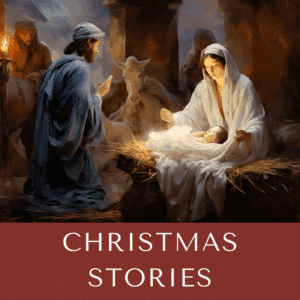
Let me talk for a moment if I may about Mary – the mother of Jesus.
Mary was of the royal house of God. She was a princess by birth. She was a woman of prophecy. Her identity, mission and name were known hundreds of years before she was born. She was more beautiful and fair than any woman of her day. She was of sufficient spiritual capacity to be transfigured and stand in the presence of God and angels. She was favored above all women of all time. It was she who was selected above the billions to be the mother of God’s only begotten son.
Of sufficient stature was she that when Gabriel came to her, he did obeisance to her and Mary wondered why an angel would salute her so. She was chosen to be the mother of the greatest man who would ever live. He was born to be the greatest king in this world’s history and she was chosen to help him, to raise him. She was chosen to have a relationship with the God of heaven, different from any other on this Earth.
When she said, “be it unto me according to thy word”, Mary accepted a responsibility and burdened the likes of which no woman has ever known. What a trial it must have been for this chaste and modest young woman to have anyone think her an adulteress? In an ecstasy of spirit with Elizabeth, Mary praised the Lord with a profundity and power that has few equals in Scripture.
Meekly, Mary bore the difficult journey to Bethlehem when her time was full. There is no scriptural record that this remarkable woman ever weakened, murmured or complained of all that she was called to bear. Some mothers tend to over protect but not Mary. She understood from the beginning that this child was for the world and she couldn’t save him from everything.
When the shepherds came in from the field, she let them see him. From the beginning and throughout her life, Mary sacrificed her name, reputation, will, wants and personal comfort for her son. It is a law of God that commensurate with great blessings are great trials.
I believe that Mary was tried in mortality as no other woman has ever been. In the temple, Simeon promised her that her son would be the subject of persecution and would one day meet the point of a sword yet there is no evidence that Mary shrank back from the challenge of standing by him. Throughout his life, she was true to him till death. After all that Mary had witnessed of the miraculous, it speaks to her spiritual maturity that she kept sacred secrets and could thus be trusted by God.
Mary was an obedient woman of the law though her son would fulfill The Law of Moses yet she still complied with it. Though Mary had been the woman on whom God had bestowed such infinite favor, yet, she was faithful and obedient to the leadership of her beloved husband, Joseph. She followed him in flight into Egypt and eventually to Nazareth where they settled.
In the spirit of worship, she came up to Jerusalem every year for the feast of the passover. On one of those trips, she and Joseph lost Jesus for several days. Can you imagine how it must have anguished her when they couldn’t find him?
Oh my! We have lost the son of God!
Mary bore at least from the record at least six more children. At the marriage in Cana, Mary presided over the festivities and when they ran out of wine, she demonstrated an implicit faith in her perfect son. It is worthy of note, the tenderness and loving relationship between Mary and her son. Contrary to what appears in some scriptural texts, He was never unkind, dismissive or disrespectful of her. She was of queenly nobility without acting like a queen and especially she was a queen to Him.
In terrible pain, she at his bleeding feet when he hung on the cross and resigned herself into the care of John the beloved at her son’s request but where was Joseph? Could it be that with all she has that she has been born. Now she is a widow?
We know very little that we can trust of her last year’s immortality but we know enough of the first 50 years of her life to declare with certainty that the trust placed in her by a loving Heavenly Father was deserved.
Mary was called and foreordained from before the world’s creation of all our father’s daughters. She stands supreme as the most faithful and powerful of them all. Someday, we will more fully know how noble and great she really was. She was and is a holy woman of God.
Thank you for listening. Many of the stories you heard today have been published and are archived at glennrawsonstories.com. If you would like more information you can communicate with us there. We will be back again with another podcast next week.







Reviews
There are no reviews yet.