Description
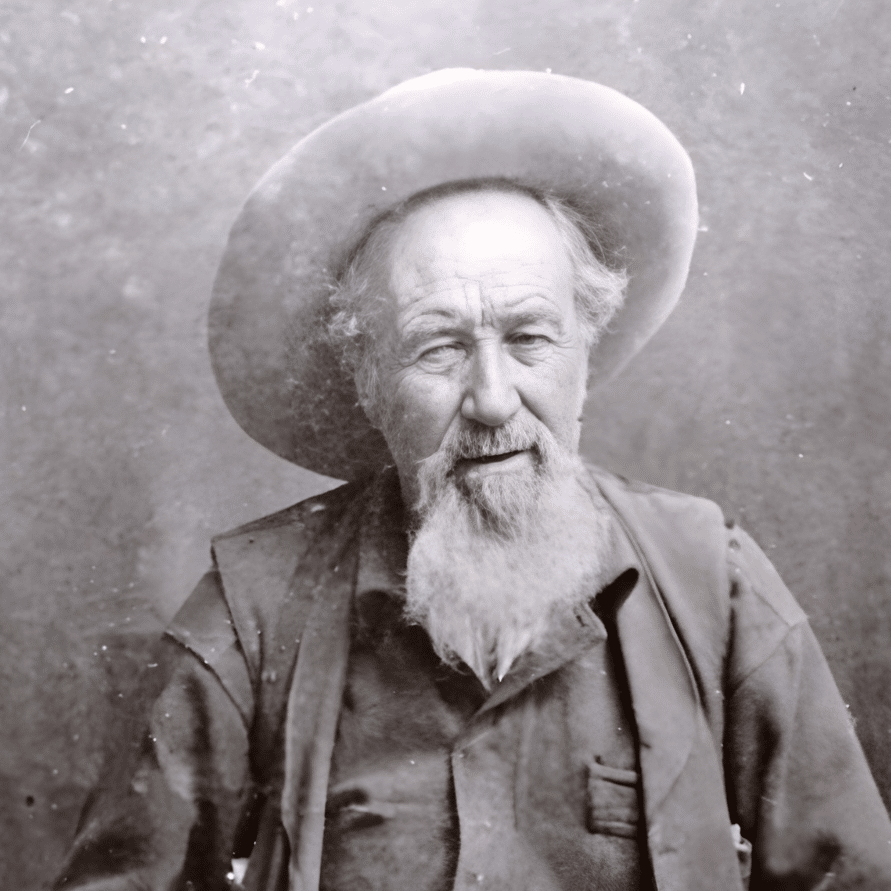
The Wild Boy: C. Allen Huntington
In the first week of November 1856, the pioneers of the Martin Handcart Company and others stood on the south bank of the Sweetwater River looking up into what would someday be called Martin’s Cove.
The weather was bitterly cold. The snow was deep and still coming. It was determined to take the suffering and exposed company up into the Cove and seek shelter against the Granite Mountains backing the Cove, but in order to accomplish that they would need to depart the regular trail and cross from the south side of the Sweetwater River to the north side.
The river, mostly frozen over, or at least flowing with ice, was some 100 feet wide and about 3-4 feet deep. Crossing that river would be an arduous task in the extreme and some shrunk back, unwilling to make the attempt. I quote the commonly rendered telling of the story:
“After they had given up in despair, after all hopes had vanished, after every apparent avenue of escape seemed closed, three eighteen-year-old boys belonging to the relief party came to the rescue, and to the astonishment of all who saw, carried nearly every member of that ill-fated handcart company across the snowbound stream. The strain was so terrible, and the exposure so great, that in later years all the boys died from the effects of it. When President Brigham Young heard of this heroic act, he wept like a child, and later declared publicly, ‘that act alone will ensure C. Allen Huntington, George W. Grant and David P. Kimball an everlasting salvation in the Celestial Kingdom of God, worlds without end.’”
His name was Clark Allen Huntington and he was not 18 years-of-age, but rather 24. He was the son of Dimick B. Huntington. He did indeed carry the emigrants across the river along with others, and he further assisted in bringing those beleaguered people into the Salt Lake Valley.
Some time after the rescue, an evening meeting was held in Salt Lake City—a fireside, if you will—in which Al Huntington (for that is how he was called) stood up and bore testimony of the power of God in the rescue. According to Mercy Fielding Thompson who was there:
“I attended meeting at our School House last Sunday evening and it made me to rejoice to hear the brethren testify of the goodness of God and especially Allen Huntington who confessed that he had been a Wild Boy but that [he] had seen so much of the power of God that he did rejoice while traveling to meet the companies on the road and bringing them in.
He said nothing but the power of God could have saved them. He exhorted his young comrades to turn away from their follies and seek to build up the Kingdom of God. His mother wept with joy and his father rose and declared it was the happiest time he ever saw. It was really affecting.”
The Rescue had a sobering and converting effect on the “Wild Boy,” Allen Huntington.
Nine years later, the Black Hawk War raged in Utah—a conflict between the Native Americans and the Whites. In the East, Chief Tabby prepared to:
“…sweep West, join Black Hawk and thus cut off the isolated southern communities from further help until they would be destroyed. The only thing that kept Tabby from doing just that was the brilliance of Brigham Young and the courage of Al Huntington and William Madison Wall and a few of his Company. Brigham Young was only too aware of the danger Tabby presented and so called Al Huntington to go alone to Tabby’s camp and prevail upon him to cease his raids and live in peace.
Brigham Young as a seer and prophet of the living God promised Huntington that no harm would befall him if he undertook the task. With that promise in mind, Huntington did as directed. He went to Tabby’s camp and attempted to deliver the President’s message, but the Indians were too angry to listen to words of peace.
Oddly no attempt was made at first to harm Huntington, probably due to the amazement that a white man would come alone to their village. But as he attempted again and again to preach peace to them, they became more and more angry until their anger was at a fever pitch, when a messenger arrived to tell them that Sanpitch had been killed. The Indians were now ready to kill Huntington in retaliation.”
The cry went up to “Kill the Mormon,” but then an Indian named Sowiette—old and blind—and a friend of the settlers:
“…rose to his feet and took the Indians to task for their attitude. One thing an Indian is always willing to acknowledge was courage. Sowiette reminded them that it took the utmost courage to come to their village alone, as Huntington had done. He told them that since the brave man had come in peace he should be allowed to leave in peace. With powerful words of Sowiette in their ears, the Indians let Huntington return to his home unharmed just as President Young had promised him.”
Clark Allen Huntington lived to be 65 years-old. It is said that he passed away from the effects of a persistent cough. The cough which he developed on November 4, 1856—that fateful day he carried the members of the Martin Handcart Company across the Sweetwater River in Wyoming.
Sources:
https://www.familysearch.org/en/tree/person/memories/KWNC-8BN
Mercy Fielding Thompson to Joseph F. Smith, Salt Lake City, 7 December 1857 (CHL MS 1325_b0009_f0003) (quotation was edited for readability)
Jack M. Lyon, Linda Ririe Gundry, and Jay A. Parry, eds., Best-Loved Stories of the LDS People [Salt Lake City: Deseret Book Co., 1997], 100.)