
Description
The Stranger in Buckskin
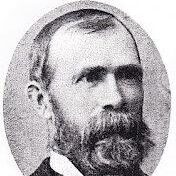
Theirs was a remarkable love story. Ann Ratcliffe was born at Little Crosby, Lancashire, England. Her father, John, owned and operated a successful bakery. In time Ann worked in the bakery with him. Then her father died of Typhoid Fever. Ann ran an ad for someone to help her in the bakery. Thomas Karren answered the ad. He was a skilled baker and came highly recommended. She hired him. Over the next two years as they worked together they fell in love and wanted to get married, but Ann’s mother opposed the marriage. Ann was an English Catholic and Thomas was of the Church of England. Finally Ann’s grandmother gave consent for the marriage and they were married May 11, 1833.
Thomas was a seeker always searching for the true Church. When the elders brought him the Book of Mormon he studied it diligently and knew that he had found the true Church. He was baptized May 11, 1842, but Ann was not ready and refused to be baptized. In time however, because she trusted Thomas, she too was baptized.
Once again Thomas was eager for the next step. He wanted to emigrate to America, join the Saints, and meet the prophet Joseph. According to the Ann’s biography,
This was the greatest trial of her life, to know that she would either have to give up her home, mother, sisters and brothers, and all that was dear to her and go to some new country that she knew nothing of, or part with her husband. As she was willing to trust herself in his care in her younger days, she felt she could trust him still.
On the day of their departure their youngest son Joseph died. The call for departure was so immediate that Thomas and Ann were forced to leave the burial of their child to Ann’s sister who despised their religion. The grief of that loss and the sickness that bore her down at sea brought Ann to the point where she wanted to die herself, but with the help and encouragement of Thomas, her family, and her friends, she rallied and regained her health.
When President Brigham Young called for volunteers to join the war with Mexico, Thomas was an Englishman—feelings of patriotism for America were not his birthright. Nevertheless, he stepped forward and was assigned to Company E. “Only the strongest sense of duty and devotion to my religion,” said Thomas, “could induce me to leave my wife in her delicate condition and our children under such distressing conditions.” The shock of Thomas’s leaving caused the pregnant Ann to go into labor and prematurely deliver a baby girl. The babe lived only 24 hours.
Thomas marched off with the battalion headed west. At one point, Thomas became so ill—ravaged by fever– that orders were given to leave him to die. Thus, Thomas was stretched out on the scorching sands and left to die.
He lay there listening as the beat of the Battalion drum grew fainter and fainter, not knowing whether his death was to be by wild animals, or savages, or come on as the result of the fever which possessed him. But it was not the will of Providence that he should die at that time. After a few hours some emigrants passed his way and upon seeing a man lying stretched upon the ground, with his tongue protruding to his chin, they approached to see if he was still alive. Finding that he was yet breathing they lifted him into their wagon and gave him every care within their means. Upon arriving at Santa Fe he again the Battalion, and although very much improved in health, he was not able to undertake the march to California, so remained at Pueblo for winter quarters. The following July, with others who had wintered at Pueblo, he entered Salt Lake Valley, immediately following the arrival of Brigham Young. He was among the number who received the order from President Young to erect a bowery, and his spade, with others, turned the first soil on the Temple grounds.
Ann and the five remaining children lived for a time in their wagon there on the Missouri River. It was the rainy season and frequently the children would wake to find their ill and weakened mother immersed in her bedding in the wagon box. They would pick her up, dip out the water and lay her back down.
Then in time a man came and offered Ann his cabin back at Garden Grove, Iowa. She took it even though it meant she had to backtrack along the trail. There she and the children established a comfortable home.
Sometime in October of 1847, a stranger clad in buckskin and buffalo leather came to their door. When he entered the home the youngest children were frightened, but they soon realized that it was their father. “Words cannot express the great joy of such a return home,” wrote their daughter Catherine, “As my parents had in their parting, thought they would never meet again.”
Thomas and Ann eventually made their way west and became some of the first settlers of Dry Creek, Utah, now called Lehi. There they served and there they were buried.
Sources: https://www.familysearch.org/tree/person/memories/KWJC-GVW








Reviews
There are no reviews yet.