Description
The Gospel Meant So Much To Him
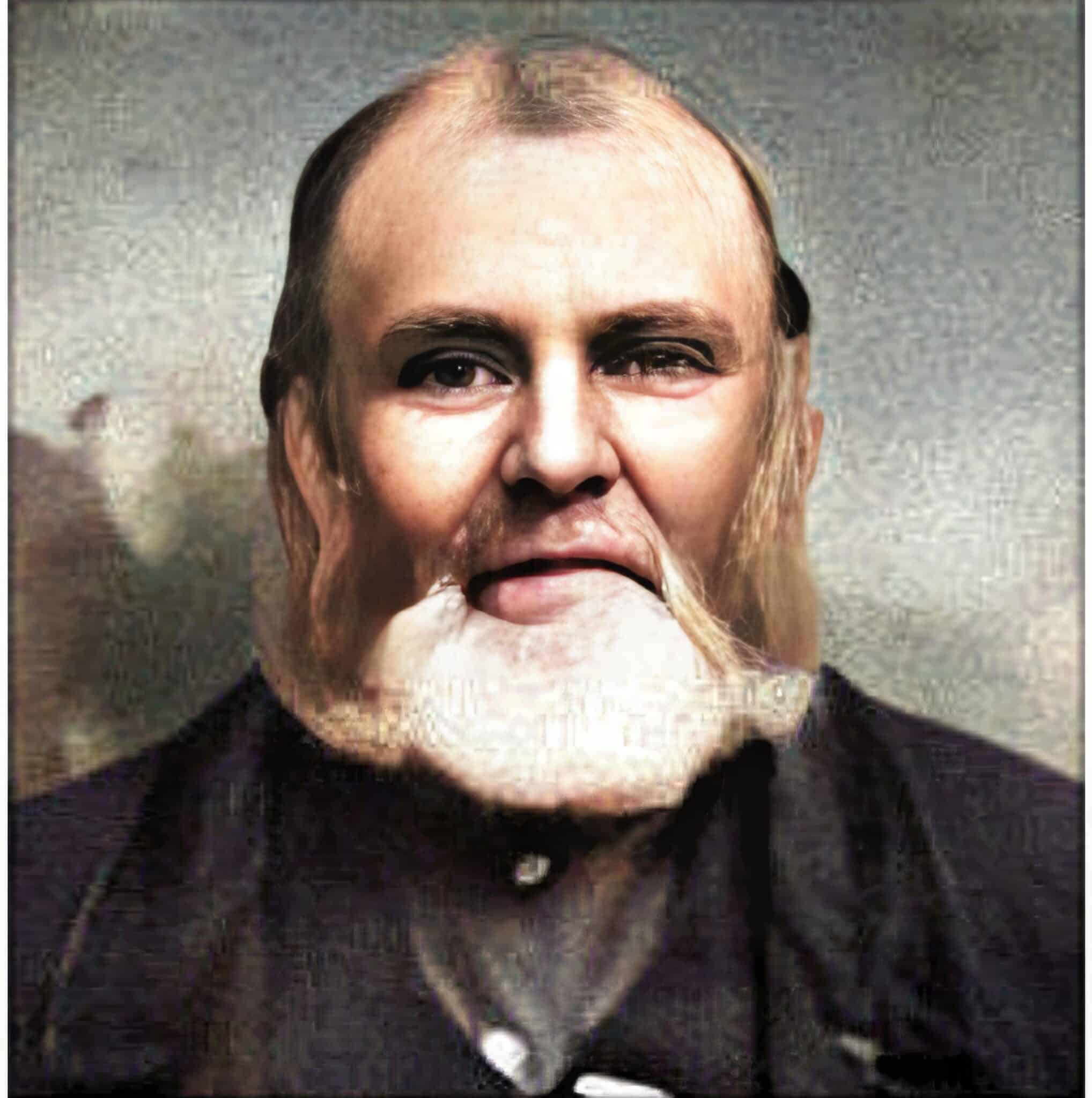
In the winter of 1845-46 in the state of Indiana, there lived the family of Abel and Milburn Leitherland Butler. They were Baptists, farmers, and landowners. In fact, Abel is reported to have been one of the largest landowners in Indiana at the time.
There were sixteen children in that close, hard-working, happy family. According to their fifth child, William Franklin, his parents “were so very loving and kind.” The family was able to raise most of what they needed, but cash for other goods was in short supply, so that winter, Bill’s older brother, George went to Tell City and hired out.
While he was there, he came into contact with Latter-day Saint missionaries, heard their message and was baptized. George wrote home and told his father what he had done. According to family records:
His father called his son Bill, and told him to go to Tell City, and bring George home away from those horrid Mormons. Bill went the distance of 200 miles with a team and wagon. When he told George of his father’s wishes, he [George] said, ‘If that is what Father wants, I will go, But I want you to attend one of their meetings before we go back.’
Bill agreed to go and was deeply impressed by what he heard. He “sat up until the wee hours of the morning discussing and learning more about this religion that was despised by the majority of the people of the world at that time.” William Franklin Butler was baptized Jan. 5, 1846.
Bill thought for sure that his father, being a broad-minded man, would surely change his mind once he heard the message of the Restored Gospel, but alas—that is not what happened. According to the family:
When he broke the shocking news, his father flew into a rage and told Bill that if he didn’t denounce Mormonism, he would have to leave his home and never darken his door again. Bill tried to explain, but to no avail. He was turned from his childhood home, never to return. He tried to live around where he was raised, but it was hard to endure the treatment he received. His brothers and sisters and friends turned against him. He could have given up his religion and been with his friends once more, but the gospel meant so much to him, he left his hometown and loved ones and joined…[the] Saints.”
In the years that followed, Bill got married to Sarah Ann (Sally) DeWitt 22 September 1846 in Perry County, Indiana. In June 1853, they crossed the plains as part of the Daniel Miller wagon company. “They landed in the Great Salt Lake City Friday September 9, 1853.”
Shortly after, they settled themselves in Spanish Fork, Utah. Bill was one of the those called out into Echo Canyon in October 1857, as Johnston’s Army threatened their peace.
Then at the October Conference, 1861, Bill “was greatly surprised to hear his name called to go to Dixie to help raise the corn and cotton. He was set apart as a counselor in the Bishopric of Dixie before leaving. They soon left Spanish Fork and arrived in Dixie early in December.” According to historian, Andrew Jenson:
When the settlers first moved to Dixie (later St. George) their homes were very crude. Many of them drove close to a large mesquite bush, unloaded the wagon box, then went to the river and gathered loads of willows which they leaned over the wagon box and rested them on the mesquite bush. It was a very crude home but answered the purpose until better ones could be provided. While living under these crude circumstances the Butlers lost a little three-year old boy, George W. He was one of the first to be buried in the St. George cemetery.
While those first settlers were living under those spartan conditions in that hostile land, Elder Erastus Snow called them together on January 9, 1862, and suggested they “erect a stone building for educational and social purposes to be the first building finished in the valley.” Bill contributed $40, a substantial sum for the day. I am told that the building still stands.
After some time colonizing St. George, William Franklin Butler moved to Pima, Arizona where he served as a patriarch. There, he lived out his days and passed away June 5, 1909. In memorial of him, his family said this:
He loved the Gospel and lived up to its teachings to the best of his ability and taught his children to do the same…. his descendants honor and revere the name of William Franklin Butler, who gave up his parents, brothers, and sisters, home, and friends for the sake of the Gospel and came West that he might be able to live the Gospel and raise his family in it… When William Franklin Butler accepted the gospel and was turned from his home, it was the last time he saw his loved ones.
Those of you now, who live in the comfort and beauty of modern St. George, Utah—do you remember those who were there first?
Sources: