Description
The Forgotten Genius
We are the product of our past. If we do not know or remember our past, we lose our identity in the present., but how can we know the distant past unless someone was actually there and left an eyewitness account? Thus, history is created by eye-witnesses who left documents. And therein lies one of the greatest ironies of recorded history.
When an attempt was made to rank the most influential people who have lived in the last 1000 years, the name Johannes Gutenberg stood near the top of every consideration. For more than 500 years Gutenberg has been credited as the inventor of movable type and the printing press—in short, he is the father of printing. In the beginning of the 1400’s books were mostly created by hand as scribes laboriously copied them page by page. They were hugely expensive and hard to obtain.
Gutenberg utterly changed the world. By 1455 in Mainz, Germany he had developed and sufficiently perfected a method for printing that would stand for centuries and the books poured forth exponentially. Books on every subject from religion to science reached into every corner of the world and transformed society. Because Gutenberg most wanted to print a Bible, bibles and religious tracts reached the peasants of Europe and the protestant reformation was born. Because scientists and thinkers alike could now mass produce and share ideas there would follow a scientific revolution and the age of renaissance. Gutenberg caused the world’s first recorded information explosion.
And yet, for all that Johannes Gutenberg gave the world the power to share knowledge, we know virtually nothing of him. Because he kept secret the development of his invention, we do now know exactly when or where or even how the first printed materials were created. Was it first done in Strasbourg France or Mainz Germany? We don’t know. His inventions demonstrate a high degree of literacy and skill as an artisan. Where was he trained? What was his profession? We don’t know for sure. We have one court document where Gutenberg claims he was sued by a woman named Anne of the Iron Door for the breach of a marriage contract. Did Gutenberg ever get married? Did he have children? We don’t know. It was never written down that we know.
Researchers have searched for centuries for contemporary documents from the life of Johannes Gutenberg. There are few and mostly incidental. Because of that, we can only guess at the details of his life.
And once printing was up and running after 1455 what did Gutenberg actually print? How many books, tracts, and other materials did he personally create in his lifetime? We don’t know. Unlike some others, he never signed his name to his work.
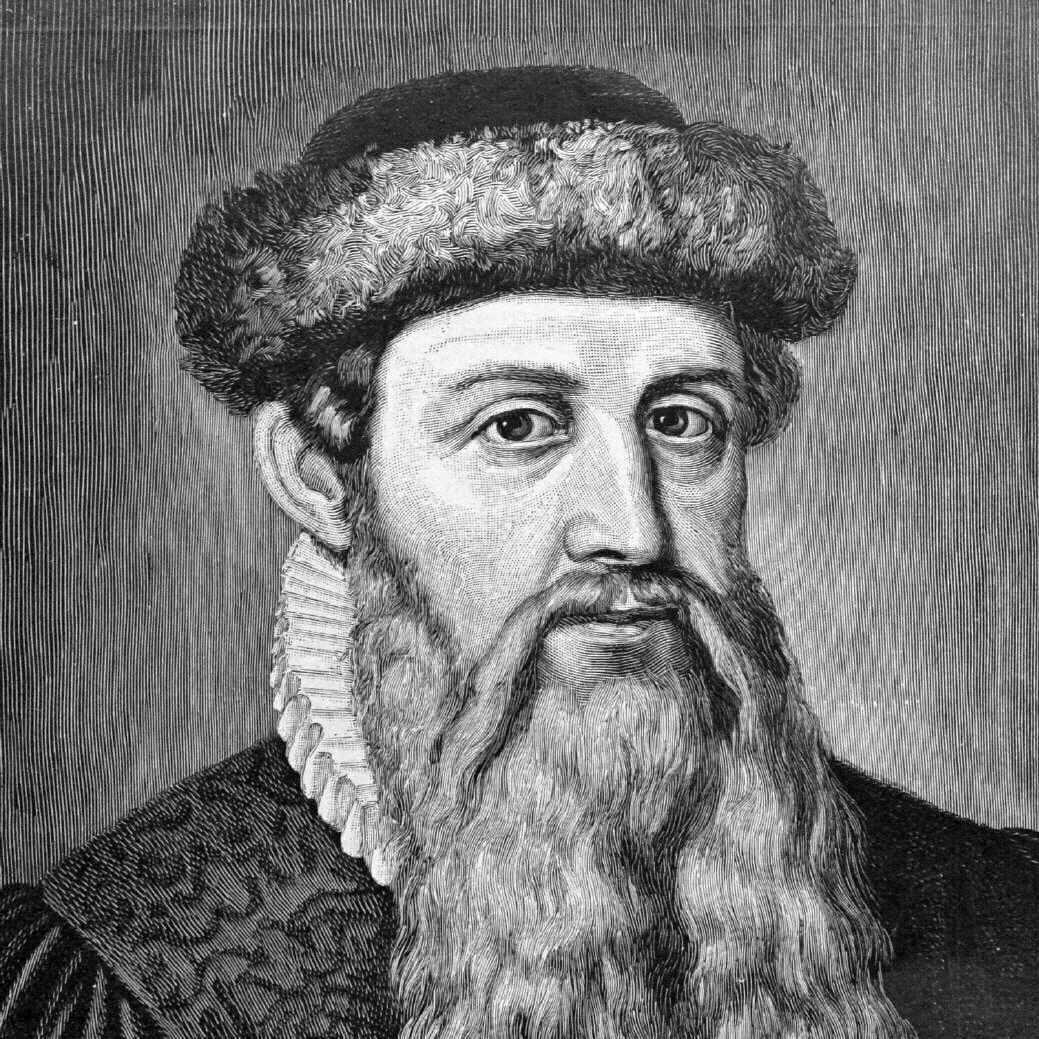
We don’t even know for sure when he was born. It is believed to have been sometime between 1394 and 1404 AD. The city of Mainz Germany selected 24 June 1400 as the day of his birth, but we don’t know for sure. And the long-bearded likeness of him that graces art and statues is likely an artist’s conception since it was created a century after he lived.
To Johannes Gutenberg rightfully goes the credit for the development of printing since contemporaries attested to that fact after he was gone, but for all that he gave us the ability to create records, he left none of himself. We know virtually nothing of the history of the man who gave history to the world. Even his grave was bombed out of existence in World War II and is now lost to the world.
And so I ask—have you left sufficient records and documents that the world will know and remember you after you are gone?
Copyright Glenn Rawson 2022