Description
Invaders
In 1780, during the American Revolution the British had a major presence in Charleston, South Carolina. They had captured the city and controlled the port. From there, they pushed inward into South Carolina and Georgia in what was called the “Southern Strategy,” where they would capture southern cities and rally Loyalist support. They had the Americans on the run, but in the summer months in the tidewater country, the British fought their own unique war—they were sick—so sick they could not stand duty, strategies and campaigns had to be delayed, and morale was low.
“In 1781, the British commander in the South, Lord Cornwallis, decided to move his army north, into the hills of Virginia, in order to avoid ‘the fatal sickness which so nearly ruined the army’ the summer before. His superiors, however, ordered him to move to the tidewater, and so in June, Cornwallis dug in at Yorktown.”
But again, by the late summer of 1781, 51% of Cornwallis’ army was so sick they could not stand up to fight, let alone “conduct the counter-siege operations that Cornwallis knew were required. American and French forces penned the troops in until Cornwallis surrendered in October, which in effect decided the outcome of the American Revolution. The Continental Army and its French allies stayed healthy until the surrender, mainly because they had only recently arrived in Virginia.”
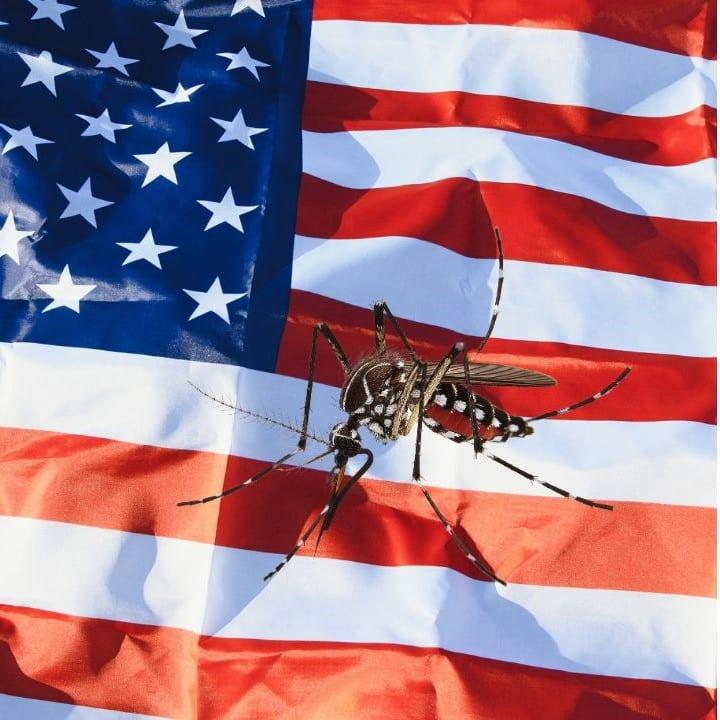
Why were the British so sick? Malaria and other mosquito-born viruses. The British had no immunity, and many southern soldiers did.
Quoting Dr. John McNeill, Historian and Ecologist:
“Before 1492, Aedes aegypti (the mosquito that loves humans) did not live in the Americas. It came from West Africa as part of the Columbian Exchange, probably on ships of the transatlantic slave trade. The mosquito gradually colonized those parts of the Americas that suited its feeding and breeding requirements, and for centuries served as the primary carrier for yellow fever and dengue, viruses that are cousins of Zika. Aedes aegypti is a peculiar and fussy mosquito. It has a strong preference for human blood—rare but not unique among mosquitoes—which makes it an efficient spreader of human disease. It lays its eggs in artificial water containers such as pots, cans, barrels, wells or cisterns. This preference for human activities distinguishes it from the thousands of other mosquito species. Aedes aegypti is, in effect, a domesticated animal.”
So—the American Revolution was significantly impacted by the lowly mosquito—an invasive species. We won the war because of a bug! All according to the will of the Almighty, the tiniest of invaders defeats the greatest world power of the time. By small and simple things great things are brought to pass-once again!
Sources:
ChatGPT and John R McNeill is professor of history at Georgetown University. His book Mosquito Empires: Ecology and War in the Greater Caribbean 1620-1914, won the 2010 Albert J. Beveridge Award
copyright: Glenn Rawson 2025