Description
From Dan to Beersheba Podcast Transcript Part 2
First story: Dear to the Heart of the Shepherd
One of my deepest heartfelt prayers, and pardon me that I’m bearing my soul just a little bit, is that I can live in such a way to be worthy of the Lord’s love in this life and His presence in the life to come. The older I get, the more I know Him, the more I realize just how awesome and incomprehensible the Savior is as a person and in His love. It is my frequent petition that He will qualify and empower me to take me, my family, and as many people as I can get, to Him and with Him.
Thus, the hymn Dear to the Heart of the Shepherd is a profound declaration of doctrine and a very personal prayer for me. Hear some of its lyrics. I won’t sing. I’ll read them to you:
“Dear to the heart of the Shepherd,
Dear are the lambs of his fold;
Some from the pastures are straying,
Hungry and helpless and cold.
See, the Good Shepherd is seeking,
Seeking the lambs that are lost,
Bringing them in with rejoicing,
Saved at such infinite cost.
Green are the pastures inviting;
Sweet are the waters and still,
Lord, we will answer thee gladly,
“Yea, blessed Master, we will!
Make us thy true under-shepherds;
Give us a love that is deep.
Send us out into the desert,
Seeking thy wandering sheep.”
The Lord Jesus Christ is absolutely incomprehensible to us mortals, in what He is and how He loves. The more we love Him, the more we realize how deep and far-reaching is His love, His mercy and His compassion for us and for those we love. Absolutely, unequivocally, Jesus and our Heavenly Father, they forget no one.
And yet, the words of the hymn that I just shared with you, Dear To The Heart of The Shepherd, were written by a woman named Mary B. Wingate, who until 2005 was for the most part unknown and forgotten in some hymnals. With that hymn, I just quoted in some hymnals this text has no author.
Mary is not listed in others like the Latter-day Saint Hymnal. Mary’s name is listed but the only year associated with her name is that the year the hymn was first published. I searched and searched websites such as hymnary.org online and it read (which is by the way one of the premium sources for studying about hymns) and it said hymnary.org does not have biographical information about this person.
She wrote a hymn how the Lord doesn’t forget any of us. How ironic that the woman who reminded us so powerfully that the Lord does not forget, was forgotten by the world until 2005 when someone cared enough to find her and tell her story.
Second Story: Elijah Edward Holden
About 134 miles south of Salt Lake City is the tiny village of Holden, Utah. I don’t know if there’s anyone watching from Holden tonight, but if you are, I suspect you know this story and the places associated with it better than I do.
As you pass by Holden on Interstate 15, Holden looks like so many other little towns in rural Utah. With the expectation of the ordinary, may I tell you the story of how the name of Cedar Fort, Utah became Holden, Utah.
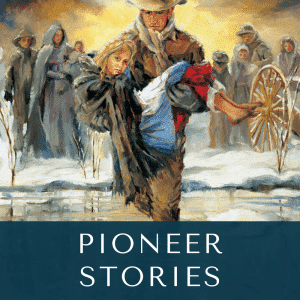
Elijah Edward Holden was born in 1826 in Kentucky. Later, he and his mother moved to Hancock County, Illinois where both were baptized as members of the church. In 1845, Elijah was ordained a seventy. In 1846, went with the church toward the Rocky Mountains. In July of 1846, Elijah marched off with the Mormon Battalion as a private in Company A.
Elijah became ill in the march to Santa Fe and was among those ordered to Pueblo with others of the battalion’s sick detachments. He and the rest of the sick detachments wintered over and entered the Salt Lake valley just three days after Brigham Young in July 1847.
Once in Utah, Elijah married soon after and settled in Provo. Turns out he didn’t care much for Provo, so he packed up his family and moved south to Fillmore – the territorial capital. Once in Fillmore, Elijah was elected as a legislator. Not long after, according to family records, Brigham Young came through the area and saw a pleasing sight not too far distant from Fillmore, that would make a good location for a town.
Elijah and others were called to settle that area and it was named, originally, Cedar Fort. For a time, they called it Buttermilk Fort because everyone that passed by received a cup of cold buttermilk. Elijah arrived in Cedar Fort, built a home and established a farm.
Then, in 1856, Elijah was called to leave his family and go as a missionary to England. Not long after his departure, his wife and youngest child passed away. When Elijah returned home, he married again and went to work building up his farm and soon had it prospering.
Then, in September 1858, Elijah Holden traveled north to Nephi where he had business, and while there, he hired a young man named Thomas Bailey to come back and help him on the farm. On September 5, 1858, they left Nephi and started for Cedar Fort. The wagons loaded with wool for the women of the town to make clothes for their families.
Not long after their departure, an early winter storm set in. It began as heavy rains and soon turned to snow. For two days the storm raged. On the night of the second day, it appears that the team pulling the wagon gave out some distance from Cedar Fort. The boy with him was cold. Elijah’s daughter recounted what happened:
“Father knew they were close to home, so he gave his coat to the boy and told him to stay with the wagon and team and he would walk home and get help. He took his gun and money and started for home, but the storm was so fierce that he lost his way becoming exhausted. He stood his gun up against some bushes, tied his money in a red bandana kerchief and put it on the end of his gun and lay down to rest. After a three day search, his body was found. The boy also froze to death.”
In 1858, a post office was established, and the name of the settlement Cedar Fort was changed to Holden in honor of one of its revered pioneers – the man who gave up his coat.
Third Story: I Love You Too, Jeremy
This is my last story for tonight. I hope there’s something tonight of use to you. As many of you know, my beautiful and beloved daughter Annie is a student at BYU Provo, and so often when she traveled with me last summer, when we were out on tour, she was asked “what are you majoring in in school?” and before she could answer I would generally interrupt and proclaim in a loud voice, “Men and she’s a 4.0 student.”
Well, recently, Annie shared the following story with her mother and me. She said, “I had been friends with this guy for quite some time so when we both developed feelings for each other, at the same time it was an easy transition into a relationship since I already loved him as a friend. The desire to say ‘I love you’ in a relationship setting came quickly.” It’s easy to love someone you already love. “One night we were cuddling on the couch, and I thought I would tease him a bit just for fun. So,” she said, “I tapped out I like you on his arm in morse code. He didn’t know morse code, so he kept asking me what I said to which I responded,” Annie said “you’ll just have to learn morse code and find out.
“A week or so went by and we were once again sitting on the couch. I thought I would tease him again, so I went to tap out I like you but realized I wanted to say I love you instead. After all, he doesn’t know morse code so he wouldn’t know the difference, right? So, I did. To my surprise, he tapped it right back. I froze, eyes wide, wondering if he said what he meant to say. After a minute, he asked, ‘Did I say it right?’ To which I replied, ‘that depends on what you were trying to say.’
“He sat up, turned to look me full in the face and said, ‘I love you, Annie.’
“’I love you too, Jeremy.’”
I love that story, yes because I am a hopeless romantic. I admit it. Also because of the awesome lesson that my dear Annie just taught. She understands and has mastered a very unique form of communication – subtle and yet very effective. For the most part, lost to this world.
She sent Jeremy a message that was both a communication and an invitation. When he made the effort to learn the language, their relationship was taken to a whole new and sweeter level. Please understand that Annie has sent messages in this way before to people, (not that same one, but similar messages) but Jeremy is the first one to care enough to hear her.
And so it is with our Heavenly Father. He communicates with us in his own unique ways, not of this world, and the message is always one of love.
Do we care enough to learn how to hear Him?