Description
It Will Not Work
June 1847, Brigham Young and his advance party of pioneers stood on the banks of the North Platte River near what is today, Casper, Wyoming. The river was running approximately 100 feet wide and 15 feet deep. They had to cross, and fording the river was out of the question.
President Young called a council meeting to come up with a plan to cross the river. Several ideas had already been tried and failed. President Young settled on a plan for a boat that would entail lashing four empty wagon boxes together. When he explained the plan to the group, one man spoke up and said, “It will not work.” To which President Young said, “I think it will.” The man further insisted that the devised ferry would not work in waters such as those.
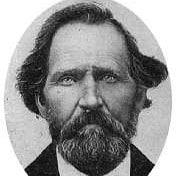
That man was Thomas Grover, a convert from Kentucky, who had spent considerable time as a canaller on the Erie Canal. At this point, Thomas withdrew from the meeting and went to bed. As he was getting into bed, he made the comment, “I have forgotten more about water than President Young will ever know.”
Thomas was overheard and the remark reported to President Young, who the next morning took Thomas to task for the comment. “I was raised on the water,” Thomas said, “and don’t know anything else.”
Brigham’s boat was built and launched into the water. Everyone stood watching, including Thomas. Heber C. Kimball observed the craft and put a hand on Thomas’s shoulder. “It runs nice,” he said.
Thomas replied, “Yes, but when it strikes the current it will go under?” According to the account, “He had barely spoken when it struck the current and disappeared.”
What happens next is the reason I share this story. President Young turned to Thomas and said, “My plan failed, what is yours?”
Thomas said, “I shall take six men and go to that grove of timber yonder and get two trees and have them cut canoe fashion and lash them together, and by daylight tomorrow we will have a boat to carry us across.”
President Young said, “Get your men and be off.”
The men were chosen and when they arrived at the timber there were two trees that would fill the bill. They worked all night, and by daylight the boat was in the river. When it was ready, Thomas said, “bring the heaviest wagon you have here.”
President Young said, “hadn’t we better run a light wagon first?”
Thomas said, “No, bring the heaviest.”
They brought a prairie schooner with 6000 pounds on it and it went across all right. They then ferried the companies across. After this crossing had been successfully made, President Young and his counselors appointed Thomas Grover and eight other ferrymen and one blacksmith to remain at the ferry and attend to the crossing of the oncoming emigrants, as well as the later companies of the Mormon pioneers.
Not only was Thomas Grover’s raft successful, it was profitable, and became the model for other rafts built later.
It is well known that Brigham Young was a powerful man of strong convictions and thank the Lord that he was for it enabled him to fulfill the charge given him by the Prophet Joseph. If such a man as that can admit failure and seek counsel from those who know more, how much more need have we to humble ourselves and seek wisdom.
Source: