
Description
I Got So Low
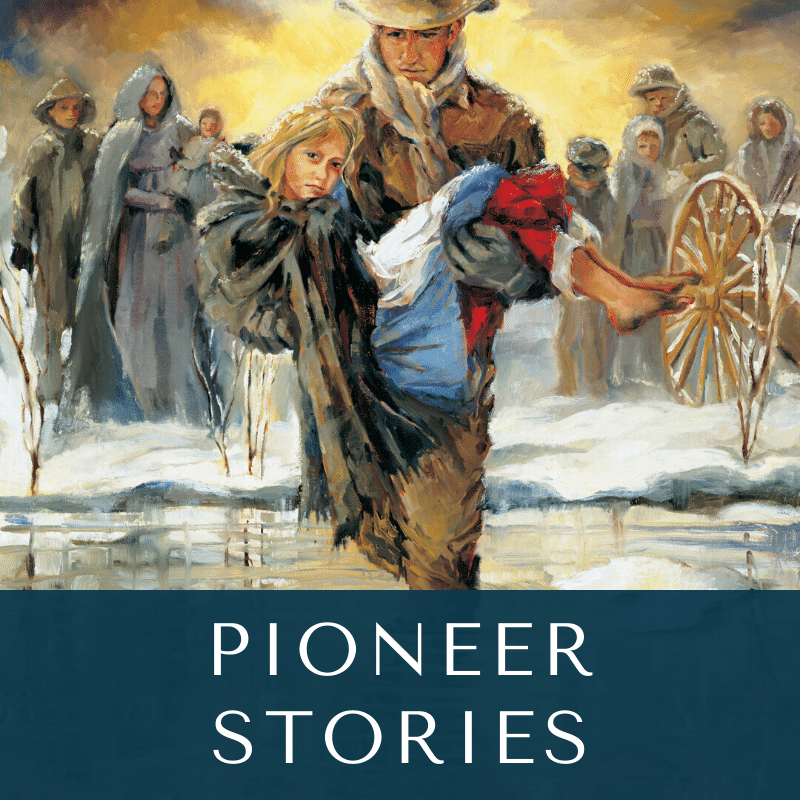
Lucy Meserve Smith married George A. Smith on November 23, 1844. When the Latter-day Saints were driven out of Nauvoo in February 1846, Lucy was among the first to leave. She described the trial of the trail in crossing Iowa.
“We encountered some very severe cold weather with very strong high winds.” “I cannot forget how cold I was standing in the tent preparing food and washing dishes for our big family. When I would wash a dish and raise it out of the water there would be ice on it before I could get it wiped. I could not get warm from morning till night and from night until morning.” “In the morning the bed covers would be frozen stiff.” “One day we traveled through rain, mud slush all day, when night came, the mud was six inches deep and the men were completely drenched.”
Lucy gave birth to a son at Cutler’s Park in Nebraska territory in August 1846. She gives a vivid description of the sickness that beset not only her, but many at Winter Quarters in the winter of 1846-47. She wrote,
“We moved down to Winter Quarters when my babe was two weeks old. There we lived in a cloth tent until December. Then we moved into a log cabin, ten feet square with sod roof, chimney and only the soft ground for a floor, and poor worn cattle-beef and corn cracked on a hand mill, for our food. Here I got scurvy, not having any vegetables to eat. I got so low I had to wean my baby and he had to be fed on that coarse cracked corn bread when he was only five months old. We had no milk for a while till we could send to the herd and then he did very well till I got better. My husband took me in his arms and held me till my bed was made nearly every day for nine weeks. I could not move an inch. Then on the 9th of February, I was 30 years old. I had nothing to eat but a little corn meal gruel. I told the folks I would remember my birthday dinner when I was 30 years old. My dear baby used to cry till It seemed as though I would jump off my bed when it came night. I would get so nervous, but I could not even speak to him. I was so helpless I could not move myself in bed or speak out loud. . . . When I got better I had not a morsel in the house I could eat, as my mouth was so sore. I could not eat corn bread and I have cried hours for a morsel to put in my mouth. Then my companion would take a plate and go around among the neighbors and find someone cooking maybe a calf’s pluck. He would beg a bit to keep me from starving. I would taste it and then I would say oh, do feed my baby. My appetite would leave me when I would think of my dear child. My stomach was hardening from the want of food. The next July [1847] my darling boy took sick and on the 22nd, the same day that his father and Orson Pratt came into the valley of the great Salt Lake, my only child died. I felt so overcome in my feelings. I was afraid I would lose my mind, as I had not fully recovered from my sickness the previous winter”
Winter Quarters is a vital part of our sacred history. It was a time and place when our people were sorely tried and tested. It is important that we do not forget what they suffered for our present comfort.
Sources: “Original Historical Narrative of Lucy Meserve Smith: 14 Aug. 1884–1889” typescript, Family and Church History Department Archives, The Church of Jesus Christ of Latter-day Saints, 7–8).
https://history.churchofjesuschrist.org/content/trek/winter-quarters?lang=eng
Copyright Glenn Rawson 2022








Reviews
There are no reviews yet.